Brighton Chireka

Dr Brighton Chireka is a Primary Care Physician and a Certified Lifestyle Medicine Physician. He is also an International Health Consultant and an awardee of the NHS Leadership Academy Award in Executive Healthcare Leadership. He is a Founding Fellow of the Faculty of Medical Leadership and Management. You can contact him at brighton@docbeecee.co.uk

Healthcare is rushing towards artificial intelligence. AI is being used to write clinical notes, support diagnosis, triage patients, predict deterioration and automate administrative work. The promises are substantial: greater efficiency, lower costs, less bureaucracy and more time for clinicians to care for patients. Some of those promises will be realised. But before we ask what AI can do, healthcare needs to ask a much simpler question: what problem are we actually trying to solve? It sounds obvious. In practice, it is remarkably easy to skip. An organisation identifies an AI product. A demonstration is impressive. A pilot is proposed. A business case follows. Only later does someone ask how success will be measured. We have started with the solution and worked backwards towards the problem. That is the wrong way round. Clarity before technology Not every AI project needs a lengthy business case before anyone can think creatively about it. But every project needs clarity. What, precisely, hurts, and for whom? Is it the clinician spending an additional hour completing documentation after surgery? The patient waiting too long for an appointment? The administrator repeatedly performing a task that could be automated? The organisation spending money on an inefficient process? These are different problems. They may require different solutions. And sometimes the best solution will not involve AI at all. That is an important test of serious AI leadership: could we solve this problem without AI? If we could, AI should have to earn its place against the alternative, not merely against doing nothing. The danger is that organisations become so impressed by what technology can do that they begin looking for somewhere to use it. The vendor arrives with a solution and, unintentionally or otherwise, brings a definition of the problem with it. Soon we have a solution searching for a problem. Healthcare needs the opposite: problem-led innovation. Every AI benefit has another side There is another question I believe healthcare leaders should ask before deploying AI. Not simply, “What problem will this solve?” but: what trade-off are we making? Healthcare rarely offers clean wins. AI may save clinicians time, but we must protect the quality of attention given to patients. It may make documentation faster, but we must protect the accuracy of the clinical record. It may accelerate triage, but we must protect diagnostic caution. It may standardise decision-making, but we must preserve professional judgement for the patient who does not fit the pattern. It may reduce costs, but we must understand what that means for workforce trust and morale. And decision-support systems may help clinicians think, while at the same time creating a risk that clinicians gradually become less willing to think independently. These are not reasons to reject AI. They are reasons to lead it properly. For every benefit we pursue, we should identify what we refuse to sacrifice to achieve it. I think of this as defining the floor before chasing the ceiling. If we want to save clinician time, how much deterioration in patient experience would be unacceptable? If we want faster triage, what safety threshold must never be crossed? If we want lower costs, what impact on staff workload or retention would make us reconsider? Success cannot simply mean that the number we wanted to improve went up. It must also mean that something important did not quietly deteriorate elsewhere. Who gets to decide what success means? This brings us to another problem with the way return on investment is sometimes discussed. Success depends on who is looking. Ask a management team and you may hear about productivity, efficiency and cost. Ask clinicians and they may talk about workload, trust, professional judgement and whether the technology genuinely gives them more time with patients. Ask patients and the answers may be different again: was I safe, was my information protected, did somebody explain what the technology was doing, and perhaps most importantly, did I still feel seen and heard? All three perspectives matter. An AI implementation can therefore be financially successful and clinically unpopular. It can be popular with clinicians while making patients uncomfortable. It can increase productivity while creating risks that are not immediately visible on a spreadsheet. The disagreements between these perspectives are not inconvenient details to be managed away. They are where leadership is most needed. Imagine the AI project has already failed There is a simple exercise I would like more healthcare organisations to perform before switching on an AI system. Imagine it is 12 months later and the project has failed. Then ask why. Perhaps clinicians stopped trusting it. Perhaps patients disliked it. Perhaps the promised savings never appeared. Perhaps the technology worked perfectly well, but the workflow around it did not. Perhaps work was not removed at all, it was simply moved somewhere else. This is a pre-mortem: imagining failure before implementation so that preventable weaknesses can be identified while there is still time to do something about them. Ask five questions. What exact problem are we solving? What trade-off are we making? What would patients, clinicians and the organisation each call success? Does this technology genuinely fit the problem? And what evidence would make us pause or stop? That final question matters. We often define the conditions for starting innovation without defining the conditions for stopping it. But stopping an AI pilot should not automatically be regarded as failure. Sometimes stopping is evidence that governance worked. Take the AI scribe Consider one of the fastest-growing applications of generative AI in healthcare: ambient clinical documentation. The attraction is obvious. Instead of spending much of a consultation typing, a clinician can have a conversation with a patient while technology helps generate the clinical note. As a GP, I understand the problem this is trying to solve. The real problem is not that healthcare “needs AI”. It is that clinicians can spend significant amounts of time documenting care, sometimes finishing notes after the working day should have ended. That is a human problem. AI may provide part of the answer. But now apply the trade-off test. We are trying to reduce documentation burden and cognitive load. What must we protect? The accuracy of the clinical record. Patient trust. Confidentiality. And the quality of the interaction between clinician and patient. An AI-generated note reflects what a system captured and generated. It does not replace the clinician's judgement about what is clinically important. The clinician must therefore remain responsible for reviewing and approving the record. Then we need to ask whether the technology has genuinely removed work. If I save five minutes writing a note but spend four minutes correcting it, what exactly have we achieved? If the system performs differently across accents, dialects or communication styles, who receives the benefit and who inherits additional risk? And if productivity improves while patients increasingly feel that technology has entered a space they once regarded as private and human, should we still call that success? These are harder questions than asking how many minutes the software saved. They are also much more important. The real AI challenge is leadership AI will improve. Models will become more capable. Systems will become better integrated. The technology that seems remarkable today may look ordinary within a few years. But better technology will not remove the need for better judgement. The future of AI in healthcare will therefore not be determined by engineers alone. Nor should it be determined only by executives, regulators or clinicians. It will depend on our ability to bring these worlds together and ask better questions before technology becomes embedded in everyday care: what are we trying to solve, who benefits, who carries the risk, what are we willing to trade, what must we protect, how will we know that this has genuinely made healthcare better, and what evidence would persuade us to stop? The healthcare organisations that get AI right may not be those that adopt it fastest. They may be those with the courage to think clearly before they adopt it at all. Because responsible innovation does not begin with technology. It begins with the problem we are asking technology to solve.

Before Healthcare Buys More AI, It Needs to Ask a Simpler Question

AI is being used to write clinical notes, support diagnosis, triage patients, predict deterioration and automate administrative work. The promises are substantial: greater efficiency, lower costs, less bureaucracy and more time for clinicians to care for patients. Some of those promises will be realised. But before we ask what AI can do, healthcare needs to ask a much simpler question: what problem are we actually trying to solve?

Before Healthcare Buys More AI, It Needs to Ask a Simpler Question Read More »

Psychological Safety

Building Psychological Safety in Teams: The Foundation of Thriving Workplaces

What is Psychological Safety?Psychological safety, a concept popularized by Amy Edmondson, is the belief that one can speak up, question, offer suggestions, or even admit mistakes without fear of humiliation, punishment, or negative consequences. In a psychologically safe team, people feel free to be their authentic selves and express their thoughts without fear of repercussions. At its core, psychological safety is not about avoiding conflict but fostering an environment where open communication enhances collaboration, creativity, and performance. It’s about ensuring that every team member feels valued, respected, and safe to contribute—whether it’s proposing a new idea, challenging the status quo, or admitting they need help. As leaders, our role extends beyond guiding, directing, and inspiring—it’s about empowering our teams to thrive, feel secure, and go above and beyond to achieve shared goals. Why Do We Need Psychological Safety? Psychological safety is the foundation of high-performing teams. Here’s why it’s essential: The Four Stages of Psychological Safety How to Cultivate Psychological Safety Barriers to Psychological Safety Despite its importance, creating psychological safety is not always easy. Common barriers include: Practical Steps for Leaders To overcome these barriers, leaders must: The Future of Leadership In health and social care, where compassionate, person-centred care is paramount, psychological safety is not optional—it’s essential. As leaders, we must: As you reflect on your leadership style, ask yourself: The future belongs to leaders who embrace these principles and commit to creating thriving, psychologically safe teams. Let’s build workplaces where everyone feels safe to belong, contribute, and succeed—together. Yours in leadership,Dr. Brighton ChirekaFounder, DOCBEECEE Leadership Academy “Growth Doesn’t Happen By Accident. It’s Intentional, And It’s Our Shared Responsibility To Lead With Purpose.” We’d Love Your Feedback!What resonated with you in this week’s newsletter? How are you fostering psychological safety in your team? Email us at brighton@docbeecee.co.uk—your input helps shape the future of this newsletter! Subscribe to receive weekly insights delivered straight to your inbox: https://docbeecee.co.uk/contact-us/

Building Psychological Safety in Teams: The Foundation of Thriving Workplaces Read More »

Compassionate Leadership

DHSCN: The Future of Leadership in Health and Social Care

Exploring Leadership in a Sector Where Compassionate, Person-Centred Care Is Paramount Welcome to the first edition of the DOCBEECEE Health and Social Care Weekly Newsletter (DHSCN)! As promised, we are starting with one of the most critical questions in health and social care leadership: What does leadership look like in a sector where compassionate care and person-centred approaches are paramount? In this rapidly evolving and complex industry, the future of leadership is not just about expertise—it’s about connection, adaptability, and creating environments where everyone thrives. This newsletter explores the traits and practices that define outstanding leadership in health and social care. Uplifting Others: The Heart of Compassionate Leadership Leadership in health and social care begins with a simple yet profound principle: uplifting others. It’s about creating spaces where everyone feels seen, heard, and valued, fostering a deep sense of belonging. Great leaders prioritize the personal and professional growth of their team members, champion a growth mindset, and motivate individuals to embrace challenges. They embody adaptability and courage, navigating our volatile, uncertain, complex, and ambiguous (VUCA) world with grace. Leadership is not about being the smartest person in the room or seeking the limelight. It’s about listening, empowering, and creating environments where teams flourish. As the legendary Lee Iacocca once said, “I hire people brighter than me and get out of their way.” Or as I put it, “Hey leader, you hired me for my skills—then get out of my way!” Leadership Is a Group Process, Not an Individual Pursuit As leaders, we often feel the pressure to appear knowledgeable in every area. This mindset can be isolating and stressful. But true leadership is a collective effort, not an individual responsibility. Effective leaders build teams where diverse talents and perspectives contribute to collective success. They understand that leadership is about creating an environment where everyone can safely contribute, make mistakes, learn, and grow. It’s not about individual intelligence—it’s about harnessing the collective brilliance of the team. When teams feel safe to challenge the status quo, innovation flourishes. When they feel supported, they rise to their highest potential. As leaders, we must ask ourselves:   Am I uplifting my team or pulling them down? Do my team members feel cared for, trusted, and empowered? The Role of Communication in Leadership Great leaders are great communicators. But communication is more than just speaking; it’s about connecting. Leaders must:   Encourage open dialogue. Listen intently, not just to the words, but to the emotions and messages behind them. Show their teams that their voices are valued and respected. When leaders truly listen, they foster trust, motivation, and loyalty. Remember, the illusion of communication—assuming that because you’ve spoken, the message has been received—can erode trust and productivity. Decisiveness and Courage in Leadership While collaboration is essential, decisiveness is non-negotiable. Leaders must:   Use data effectively. Scan their environment for opportunities and risks. Weigh options and take calculated risks. Courageous leadership means embracing failure as part of the pathway to success. It’s about learning, adapting, and moving forward despite challenges. As I often tell participants in my leadership training sessions, “The day you stop learning is the day you stop growing.”Leaders are lifelong learners, committed to staying informed, adaptable, and relevant in an ever-changing world. Building and Empowering Teams A strong team is the backbone of any successful organization. As the acronym TEAM reminds us:   Together Each Achieves More. Leaders must nurture talent, empower their teams, and celebrate shared successes. They avoid fostering competition and comparison, focusing instead on complementing each other’s efforts. John Maxwell highlights this in his leadership framework: people follow you not just because of your title but because of what you’ve done for them. So, ask yourself:   Am I helping my team grow? Am I creating opportunities for their success? Staff Welfare: The Foundation of Client Welfare There is no client welfare without staff welfare. As leaders, we must prioritize the well-being of our teams. When staff feel valued, supported, and cared for, they are naturally driven to provide exceptional service. This leads to:   Higher employee satisfaction. Better client outcomes. Stronger organizational loyalty. Investing in your team is not just a moral responsibility—it’s a strategic one. The Future of Leadership in Health and Social Care The future demands leaders who:   Are open-minded and prioritize their teams’ growth and recognition. Inspire individuals to contribute to something meaningful rather than just earning a paycheck. Have a compelling vision that resonates with their teams and inspires action. As one participant in my training once said, “I won’t follow a leader who isn’t going anywhere.” Leaders must have a vision and the ability to bring others along on the journey. A Call to Action The challenges in health and social care are immense, but so are the opportunities. As leaders, we have the power to inspire, guide, and uplift. Let’s commit to:   Creating environments of belonging, safety, and growth. Listening deeply and communicating effectively. Prioritizing the welfare of our teams. Continuously learning and adapting to lead with purpose. The future of leadership is compassionate, collaborative, and courageous. Are you ready to be that leader? Let’s grow, lead, and inspire—together. Yours in leadership,Dr. Brighton ChirekaFounder, DOCBEECEE Leadership Academy We’d love your feedback!What resonated with you in this week’s newsletter? What challenges do you face in your leadership journey? Email me at brighton@docbeecee.co.uk—your input will shape future editions of DHSCN. Subscribe to receive weekly insights delivered straight to your inbox: https://docbeecee.co.uk/contact-us/

DHSCN: The Future of Leadership in Health and Social Care Read More »

DHSCN

Welcome to the First Edition of the DOCBEECEE Health and Social Care Weekly Newsletter (DHSCN)

A Journey Of Passion, Purpose, And Transformation Arriving in the UK from Zimbabwe 25 years ago was a pivotal moment in my life. Having trained and qualified as a doctor in Zimbabwe, I faced the challenge of writing the Professional and Linguistic Assessments Board (PLAB) examinations to practice in the UK. For a month, I sat at home immersed in my books, uncertain about the journey ahead. Then, something happened that would shape my perspective on health and social care forever. A relative of mine  mustered the courage to suggest I consider working as a healthcare assistant. She was hesitant, unsure of how I would react, but to her surprise, I eagerly said, “Yes. When can I start?” That job in a nursing home was humbling, transformative, and foundational. For nearly a year, I provided personal care, learning what it truly meant to serve others. It wasn’t just about physical tasks but about empathy, dignity, and understanding the humanity in caregiving. Later, I transitioned to supported living, working with individuals with learning disabilities. These experiences weren’t just jobs; they were lessons that shaped my view of social care from the ground up. From the Frontlines to Leadership As I balanced caregiving roles and prepared for my PLAB exams, I finally achieved GMC registration and began working as a doctor in Mid Staffordshire. My role as a Senior House Officer in Orthopedics deepened my clinical expertise, but my heart led me to General Practice, where I found my calling. Working closely with patients in residential homes, nursing homes, and supported living environments, I saw the systemic challenges faced by both carers and patients. In 2017, my journey came full circle when I co-founded a care agency and served as its chairman for five years. This leadership role revealed a significant gap: passionate professionals often struggled with leadership and management, not for lack of dedication, but due to insufficient support and training. Why This Newsletter Matters In 2020, I founded the DOCBEECEE Leadership Academy with one mission: to transform health and social care professionals into effective leaders and agents of change. Through this work, I have  encountered remarkable individuals driven by compassion but held back by the demands of leadership without the tools to navigate it. Leadership in health and social care isn’t just about managing resources or meeting regulatory standards; it’s about creating cultures of compassion, fostering collaboration, and ensuring that care is person-centred. Growth doesn’t happen by accident—it requires intentional effort, a strategy, and, most importantly, a community. Introducing DHSCN: Your Weekly Dose of Insight and Inspiration The DOCBEECEE Health and Social Care Weekly Newsletter (DHSCN) is my commitment to you, the dedicated professionals making a difference every day. Every Sunday morning, this newsletter will bring: Insightful Articles: Deep dives into topics like leadership, management, culture, safeguarding, communication, and more.Expert Voices: Guest contributors from across the sector sharing their wisdom.Actionable Advice: Nuggets of practical wisdom to enhance your leadership journey.Industry Updates: Keeping you informed about the latest developments in health and social care. This newsletter is for you—whether you’re a care manager, clinician, policymaker, or an aspiring leader. It’s designed to fit into your busy life, offering inspiration and knowledge to empower your work. Our First Topic: The Future of Leadership in Health and Social Care On Sunday, 19th January 2025, we’ll explore a critical question:What does leadership look like in a sector where compassionate care and person-centred approaches are paramount? We’ll dive into emerging leadership styles, the importance of psychological safety, and how leaders can adapt to an evolving landscape marked by technological advancements, workforce challenges, and increasing patient needs. How You Can Join the Conversation This isn’t just my newsletter—it’s ours. Your voice matters, and your needs will shape the topics we cover. I encourage you to share your thoughts, feedback, and ideas by emailing me directly at brighton@docbeecee.co.uk. You can subscribe to DHSCN via email, read it on our website at www.docbeecee.co.uk, or receive it on WhatsApp. A Call to Action I believe in the transformative power of community. Together, we can bridge gaps, solve challenges, and create a culture of excellence in health and social care. This newsletter is my small contribution toward that vision. As you read this first article, I ask for your support: Subscribe to DHSCN and share it with your network.Engage by sharing your insights and feedback.Act by applying what resonates with you in your leadership journey. Thank you for being part of this community. Together, we can inspire change, one week at a time. Here’s to making a difference, Dr. Brighton ChirekaFounder, DOCBEECEE Leadership Academy “Growth doesn’t happen by accident. It’s intentional, and it’s our shared responsibility to lead with purpose.”


Welcome to the First Edition of the DOCBEECEE Health and Social Care Weekly Newsletter (DHSCN) Read More »

As a leader in healthcare do you have a leadership development plan? 

In today’s healthcare industry, it’s more important than ever for managers and leaders to have a solid plan for developing their leadership skills. With the ever-changing landscape of healthcare, those in management positions need to be equipped to handle whatever comes their way. That’s why having a leadership development plan is so critical. Without one, you could be setting yourself up for failure. So if you’re a leader in healthcare, ask yourself: do you have a plan in place to help you grow as a leader? If not, now is the time to develop one. Here’s what you need to know about creating a leadership development plan that will help you succeed. Why having a leadership development plan is important  With the increasing demand for excellence in the healthcare industry, it is essential to provide managers and leaders with a comprehensive leadership and management development plan. Without such a plan, they are left feeling unable to lead effectively and are more likely to fail due to their lack of knowledge on the topics necessary to drive success. A well-devised leadership development plan is a crucial component of any healthcare organization’s strategy, providing a structured and organized way for managers and leaders to build the skills necessary to make informed decisions. By investing in leadership education, organisations can ensure they have the resources needed to lead their team successfully into the future. How to go about creating a leadership development plan  A leadership development plan must be carefully formulated in order to provide the healthcare industry with the most effective means of managing and leading, so that failure is not an option. The plan should include a breadth of topics such as ethics, communication and team building, in order to create an environment where managers and leaders can thrive. Additionally, identifying individual strengths is critical for creating customized plans based on each person’s talents and weaknesses. Mentorship programs or classes can also help to guide individuals on their journey towards successful management and invention within the workplace. Ultimately, with a comprehensive development plan that is tailored to the needs of each individual organization, leaders will have the support they need to successfully improve their effectiveness. What are the benefits of having a leadership development plan  Developing a leadership development plan empowers healthcare industry managers and leaders to expand their skills and competencies and be better prepared for any challenges that come their way. With guidance from experienced mentors and hands-on practice in the healthcare environment, these professionals can become well-equipped in the knowledge, ability, and capacity necessary for leading an effective team. As well as arming healthcare professionals with the confidence to manage different situations, having a leadership development plan also helps to increase performance productivity and supports organisational mission achievement. Implementing a comprehensive plan allows for greater business success, improved functionality of departments and individuals, increased employee engagement, better customer service delivery, and ultimately sets the industry up for long-term success. Who can help you create a leadership development plan The road to success in the healthcare industry starts with a strong and comprehensive leadership training plan. Creating such a plan takes effort and dedication from both you as a leader and your organisation, while setting clear expectations on how to best support the roles of each individual involved. Consultants within your organization, HR or senior management can provide helpful advice and guidance in designing an effective development plan that works for everyone. Additionally, there are many external professionals who specialise in leadership development planning—from career coaches to HR specialists—that can help you create a successful blueprint for success. Create a well-defined plan now so your team will be better prepared to face any potential challenges down the line. In short, a leadership development plan is essential for managers and leaders in the healthcare industry to succeed. Having a well-structured plan that is tailored to their specific goals, needs and capabilities will empower them with the resources they require to carry out their duties both efficiently and ethically. Furthermore, having such a plan can help healthcare organizations increase staff productivity and morale, resulting in an improved patient experience and better outcomes. Moreover, there are experienced consultants who specialise in leadership development who can provide invaluable guidance in helping to create a comprehensive leadership development plan. All of this taken together supports the notion that creating a leadership development plan should be viewed as an important first step towards becoming an effective leader or manager within any healthcare organization. Looking to take your healthcare career further? Think of the DOCBEECE Leadership Academy as a roadmap, providing you with essential guidance and support on your leadership journey. Our team is dedicated to helping medical professionals unlock their full potential by honing in on vital decision-making skills and instilling invaluable confidence along the way. Let us help make sure that failure isn’t an option!

As a leader in healthcare do you have a leadership development plan?  Read More »

The 30 Cs of Leadership 

The 30 Cs of Leadership  Leaders are not born, they are made. Anyone can develop the skills necessary to be an effective leader with the right mindset and approach in driving successful patient outcomes. However effective leadership requires more than just a knack for decision-making and strong communication – it involves a mastery of certain core tenets. The 30 Cs of Leadership outlines these essential concepts, equipping you with the knowledge necessary to lead your team or department to success. In this blog post I will take an in-depth look at each ‘C’ – from clarity and character to contribution and continuous learning- so that you can evolve into the leader your team needs and deserves. Lead confidently alongside us! Conclusion Becoming a great leader takes hard work but understanding these 30 Cs can help guide you on your journey towards becoming an effective leader who inspires those around them while driving positive change within organizations or teams. Cultivating these qualities will help strengthen relationships between leaders and followers alike while allowing everyone involved in reach success together! By cultivating these qualities – such as courage, charisma communication capacity candid credibility caring compassion coach creativity considerate common sense consistency clarity concentrate complement collaborate congruency competence confidence – every leader can become more successful than ever before!  

The 30 Cs of Leadership  Read More »

Taking Control of Your Life: Why You Shouldn’t Let Others Vent Frustrations on You 

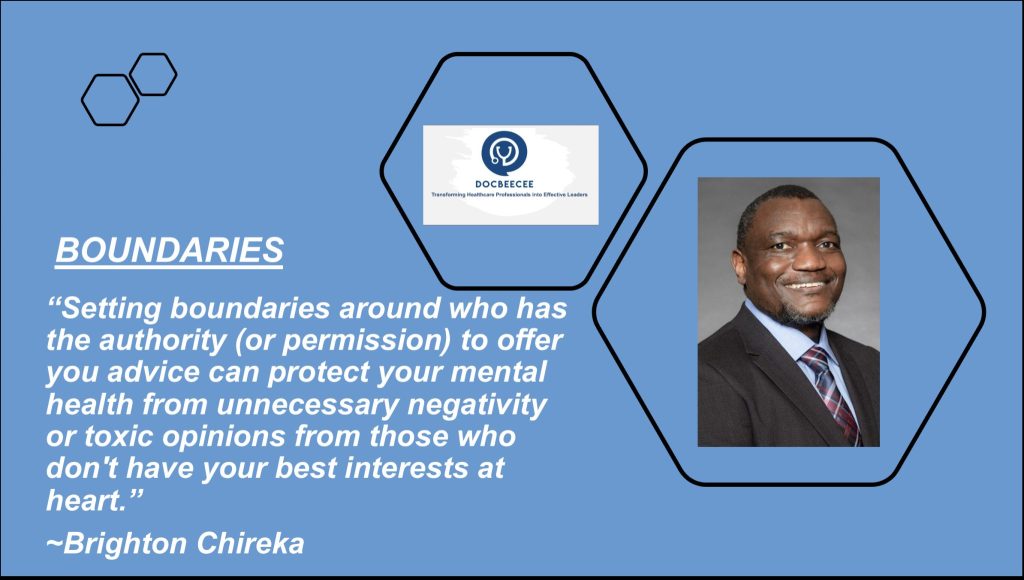
We all have people in our lives who feel they have the right to tell us what to do, even when we didn’t ask for their opinion. This is especially true when it comes to feedback or constructive criticism. It is important to recognise when that criticism is unsolicited and not constructive. While it’s important to listen to others, remember that not everyone is entitled to comment on our lives. People must first prove themselves trustworthy before they can give us feedback. It is also important that you set boundaries and take control of your life by not allowing others to vent their frustrations on you disguised as constructive criticism. Letting people earn the right to comment on your life allows you to maintain control over the kind of feedback and advice you receive.  When Receiving Advice, Choose Quality Over Quantity  Not everyone is entitled to comment on your life—let people earn the right to criticise you. Someone who genuinely wants the best for you will first comment on the good things they see in you and suggest ways that you can get better. It’s important that those offering advice come from a place of love and respect rather than a place of frustration or anger. Allowing someone to give you feedback only after they’ve seen good things in you reinforces positive self-esteem and encourages individuals to strive towards self-improvement without feeling judged or attacked by others. It’s also important that you make sure people are giving consent-based advice; unsolicited feedback should be preceded by permission from you. Any unsolicited advice should never be taken seriously without consent because it could lead to trouble down the line. In addition, if someone comes at you with an angry tone, it’s best not to respond until they can come at you with respect. That way, any advice they give is more likely coming from a place of genuine concern rather than one of frustration or anger. Furthermore, if anyone tries to force their opinion onto you without permission, remind them that they need to ask for your consent before giving any form of advice or feedback. Finally, remember, before anyone should be allowed into your inner circle, they must demonstrate genuine interest in helping further improve your life rather than using it as an opportunity for venting frustrations disguised as constructive criticism. A genuine person will always seek permission first! Why Should One Seek Consent Before Giving Feedback ? First and foremost, asking for consent before giving feedback shows respect for the person receiving the feedback. It also gives the receiver a chance to assess whether or not they’re open to hearing what you have to say. This can help ensure that any criticism given is done so constructively and in a way that will be taken seriously by the recipient.  Secondly, asking for consent helps create an open dialogue between two people. When both parties are aware of their respective expectations and boundaries, it can foster more honest communication which leads to better understanding and trust between them.  Learning To Take Charge Of Your Own Life  One way to take control of your life is by learning how to say no—even when it feels uncomfortable or difficult. This means knowing how and when to set boundaries with family, friends, and coworkers so that their opinions don’t become overwhelming or intrusive into your life. For example, if someone keeps giving unsolicited advice about how you should live your life, try saying something like “I appreciate your input but I’m going to make my own decisions here.” That way, whoever is offering the advice will know that their input isn’t needed unless asked for specifically. Setting boundaries around who has the authority (or permission) to offer advice can protect your mental health from unnecessary negativity or toxic opinions from those who don’t have your best interests at heart. Having clearly defined boundaries can also help prevent unwanted comments from becoming too personal or hurtful as well as protect you from feeling like you owe anyone an explanation about why their opinion isn’t being followed through with actionable steps on your part.   Conclusion Constructive criticism is often necessary in order for us to grow and improve ourselves as individuals; however, it’s important to remember that not everyone has the right to comment on our lives unless they’ve earned our trust by seeing the good things in us —and asking for permission—before giving any form of advice or feedback. Unsolicited advice should always be disregarded if it isn’t helpful nor beneficial in any way towards achieving personal growth and development. So don’t let anyone vent their frustrations on you disguised as constructive criticism! Only take advice from those who genuinely care about your wellbeing and actually make an effort to see the good things in you first before offering help.   That way you will be sure that what they say are truly meant for your benefit—not theirs!

Taking Control of Your Life: Why You Shouldn’t Let Others Vent Frustrations on You  Read More »

 How “We’ve Always Done It That Way” Kills Team Progress 

Joining the clinical commissioning group meant taking on a role that challenged my approach to GP engagement. When I visited one practice, their reply of ‘we’ve always done things this way’ felt like an unsettling wall was blocking me from progressing forward and making impactful changes. In response, I proposed for us all to brainstorm options untapped by them before, which led to much needed growth in attitude – proactivity had arrived!

 How “We’ve Always Done It That Way” Kills Team Progress  Read More »